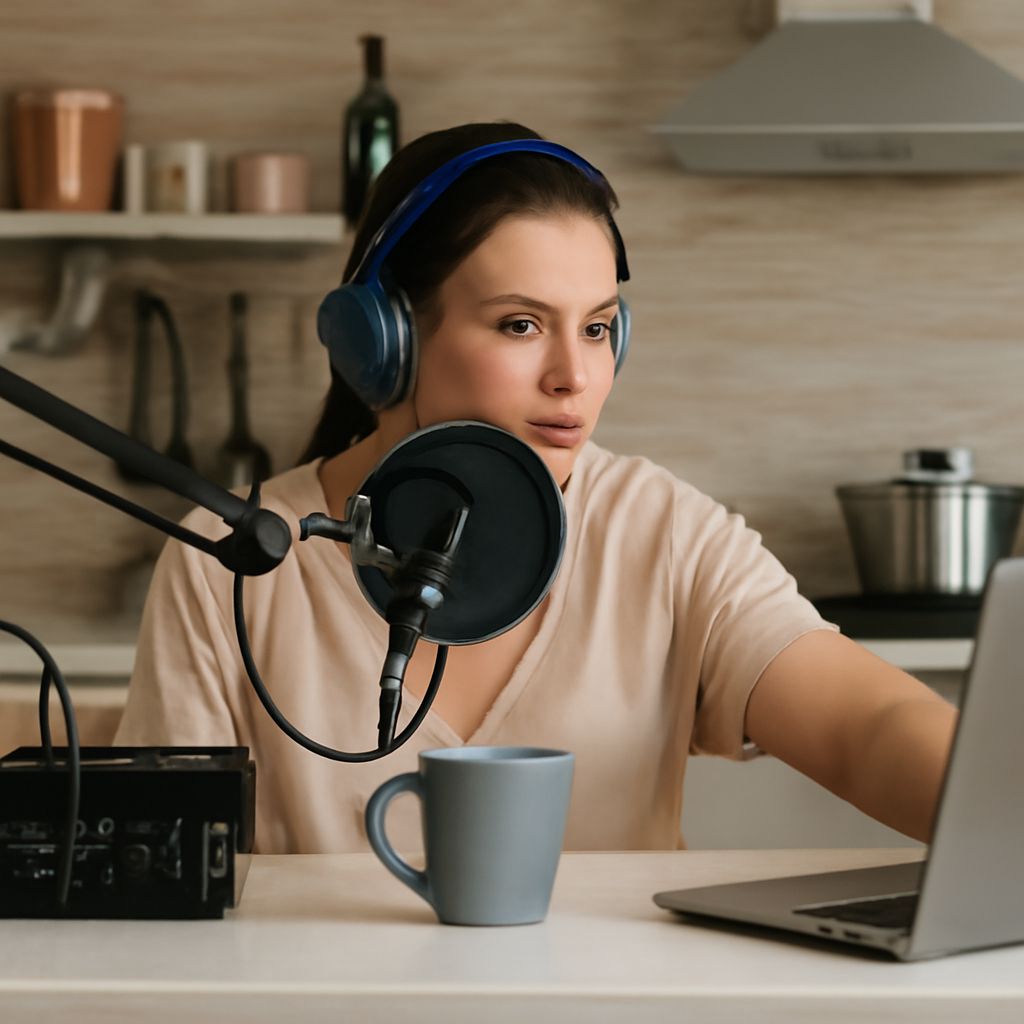
To get started in voice-over work, follow a staged path: build performance skills, create a clean and repeatable recording setup, produce a few targeted samples, then audition for work that matches your current ability. You do not need an expensive studio or a long résumé before seeking a first opportunity, but you do need recordings that sound clear, accurate and dependable.
Separate training, demo preparation, auditions and client work. Each stage has a practical readiness check. Spend more only after your current setup lets you produce consistent audio and your practice shows reliable control of the script.
How to become a voice actor: what entry-level work requires
Entry-level voice actors commonly work on short commercials, e-learning modules, explainer videos, phone systems, social media advertisements, podcasts, student productions, indie games and internal business videos. These jobs require more than an appealing voice. Clients need someone who can interpret a script, take direction, meet a deadline and deliver usable files.
Focus first on four performance abilities:
- Clarity: pronounce words accurately without sounding stiff or over-enunciated.
- Pacing: control speed, pauses and emphasis so the listener can follow the message.
- Intention: make a commercial sound persuasive, an instructional script sound helpful and a character sound purposeful.
- Consistency: maintain the same tone, volume, accent and energy across multiple takes.
Practice with scripts from several categories rather than repeating one style. Read a 30-second advertisement, a short educational paragraph, a voicemail greeting and a character scene. Record each version, listen back with headphones and mark specific issues such as rushed endings, flat emphasis, audible breaths or unclear consonants.
Training can speed up this process, especially when a coach gives precise feedback. A class or private session is useful for script interpretation, microphone technique and taking direction. Training does not automatically justify a professional demo. A demo should represent performance you can reproduce consistently, not your best isolated take after extensive editing.
You are ready to begin building samples when you can:
- Read unfamiliar copy aloud with only minor stumbles.
- Deliver the same line in several believable styles.
- Make a directed change, such as “warmer,” “faster” or “more conversational,” within a few takes.
- Record several usable takes without damaging your voice.
- Identify and correct obvious noise, distortion and inconsistent volume.
Progress is usually gradual. Early work may be short, local or lower paid while you develop credits and client references. Treat those jobs as opportunities to prove reliability, not as a reason to accept every request without clear scope, payment terms or usage information.
Build performance skills and a reliable recording workflow
Use a repeatable practice routine instead of recording randomly. Spend five to ten minutes warming up gently, then review the script for audience, purpose, pronunciation and emotional direction. Mark pauses and emphasis, record two or three contrasting takes, and listen back before choosing a favorite.
Practice speaking conversationally while keeping the words precise. Many beginners either overact or read in a flat “ announcer” voice. Imagine speaking to one specific listener, then adjust energy to suit the format. A corporate training script usually needs calm authority; a social advertisement may need faster rhythm and stronger contrast; a game character may require a clear physical objective.
A basic home workflow can include:
- A USB microphone or an XLR microphone with a suitable audio interface.
- Closed-back headphones for detecting hum, room reflections, mouth noise and clipping.
- A stable stand, pop filter and comfortable script position.
- Recording software that lets you edit, normalize and export common file types.
- The quietest room available, with soft furnishings that reduce reflections.
Room sound usually matters more than buying a premium microphone. Turn off fans and noisy appliances, keep the microphone away from walls and windows, and test several positions. A closet full of clothes may sound better than a large, bare room, but listen for a boxy or muffled quality before committing to it.
Keep the microphone at a consistent distance and record a short test before every session. Watch for clipping on loud phrases, sudden volume changes and background noise between sentences. Leave enough headroom so peaks do not distort; a clean recording that is slightly quiet can be adjusted, while clipped audio usually cannot be repaired convincingly.
Save a clean original file, an edited master and the client export separately. Use clear file names that include your name, project and version. Back up completed work and keep a simple record of the microphone position, room and processing used. This makes pickups easier to match.
Do not spend heavily on acoustic panels, microphones or studio construction until you pass a basic quality test: record a 30-second script, listen on headphones and ordinary speakers, and check that the voice is clear, free of hum, free of obvious echo and consistent from start to finish. Ask an experienced voice professional or audio editor for specific feedback before upgrading.
Create targeted samples and professional profiles
New voice actors often need several short, targeted samples rather than one long recording that tries to cover everything. Create three to five clips of roughly 30 to 60 seconds, each showing a distinct service you can actually perform. Suitable categories include commercial, narration, e-learning, character or corporate communication.
Open each sample with the strongest relevant material. Remove long introductions, excessive music and sound effects that conceal the voice. Keep editing clean and restrained. A potential client should quickly hear your delivery, diction, range and recording quality.
Label samples accurately. If a character voice is an impression, accent or highly stylized performance that you cannot sustain for a full session, do not present it as your standard service. Do not claim broadcast, animation or audiobook experience without relevant work. Credibility comes from accurate positioning as much as from polished audio.
Your profile should state:
- The services and formats you offer.
- Your natural voice qualities and suitable audiences or industries.
- Your location and time zone if relevant to live direction.
- Your equipment and ability to record remotely.
- Your typical turnaround for short projects.
- Links to the most relevant samples, arranged by category.
Use the same professional name, photograph or visual identity and contact details across your website, casting profiles and social accounts. A simple one-page site or organized profile is enough at first. Make it easy to play samples on a phone and find an email address without creating an account.
Build samples from practice scripts until you have suitable paid work. Once you complete a real project, replace the closest practice clip with an approved excerpt when the client permits it. Keep a private list of project type, role, date, client feedback and usage terms so your résumé and profile stay accurate.
How to get a voice acting job: audition, communicate, and deliver
Look for first opportunities where the required skill matches your samples. Casting platforms can provide volume and practice, while local video producers, e-learning companies, podcast creators, small businesses, community theaters, student filmmakers and indie game teams may offer more direct communication. Follow relevant production companies and respond to specific calls rather than sending the same generic message everywhere.
Before auditioning, read the full brief. Confirm the voice type, tone, word count, deadline, file format, usage, session requirements and whether the audition is paid. For a short audition, submit exactly what the client requests. Use the requested file name, avoid adding music unless asked, and provide one or two strong takes rather than a large collection of uncertain versions.
A practical audition process is:
- Read the script silently and identify the audience, action and important words.
- Check pronunciation of names, technical terms and brand language.
- Record a natural first take, then a directed variation such as warmer, more energetic or more authoritative.
- Edit only distracting mistakes, long pauses and technical noise. Preserve a natural performance.
- Listen once on headphones and once on ordinary speakers before submitting.
- Send the file with a brief message confirming availability and turnaround.
A professional submission can be simple: “Hello, I’ve attached two takes for the 30-second training video. I can deliver the final WAV files by Thursday and can attend a remote directed session if needed. Thank you for considering my audition.” Avoid lengthy personal histories or repeated follow-ups.
When a client offers a job, confirm the business details in writing before recording. Establish the script version, deliverable format, deadline, payment amount, payment method, revision limit and intended usage. Usage may distinguish a local internal video from a paid national advertisement. For larger commercial work, clarify how long the recording will run and where it will appear.
Ask for pronunciation notes and technical specifications early. Deliver clean, labeled files through the requested service, and keep the original session until the client approves the work. If the script changes substantially, explain that it is new copy rather than silently absorbing additional work.
After delivery, send a concise invoice or payment request and record the result. Track auditions, callbacks, bookings, rates, turnaround and client feedback. A useful progression is to improve one sample, submit to well-matched opportunities consistently, complete small jobs reliably, then raise your rates and invest in equipment or coaching when demand and quality justify it.