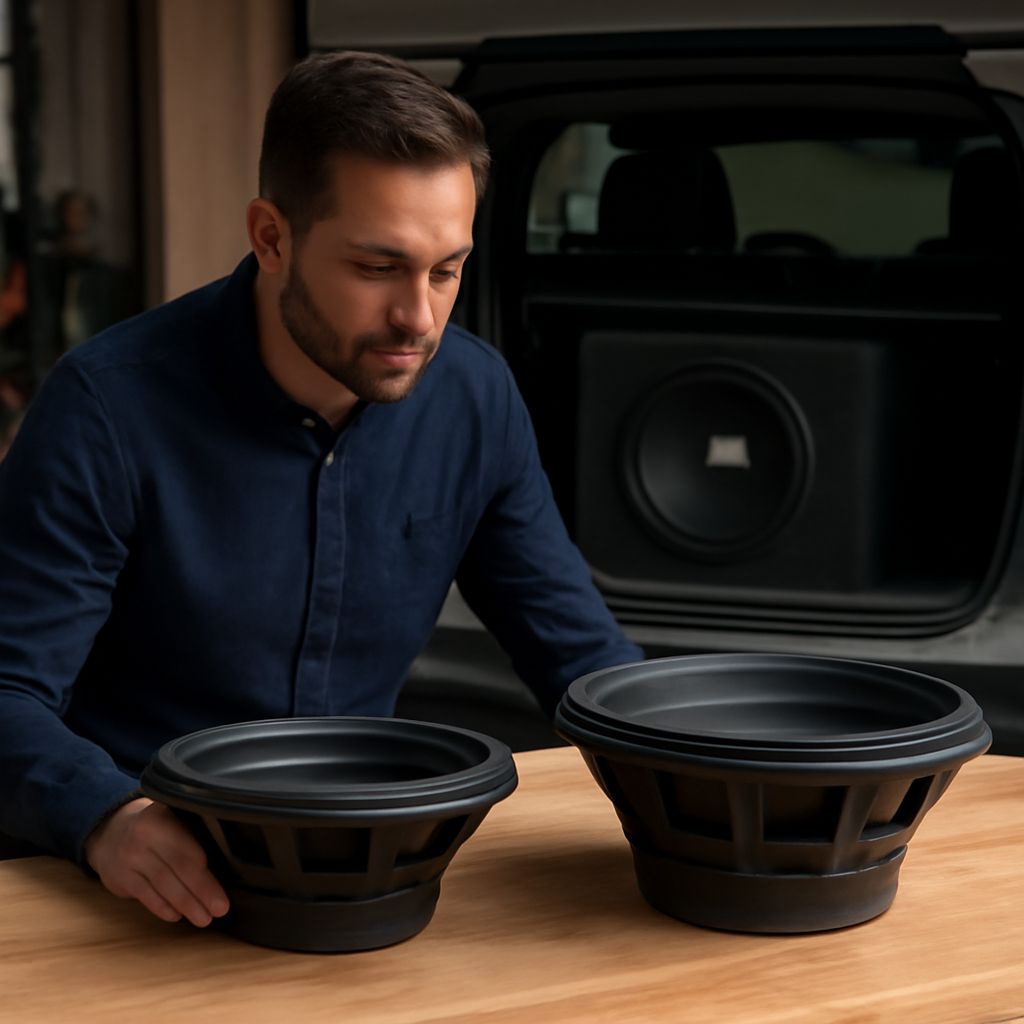
Understanding the difference between a woofer and a subwoofer is essential for anyone building or upgrading an audio system. The choice between these two speaker types affects how your music, movies, or games will sound, especially when it comes to delivering deep, impactful bass. Each serves a specific role within a speaker system, and knowing when to use one over the other can help you achieve the audio experience you want.
What is a woofer?
A woofer is a loudspeaker driver designed to reproduce low-frequency sounds, usually within the range of 40 Hz to 2,500 Hz. In a typical multi-way speaker system, the woofer handles bass and lower midrange frequencies, providing the fullness and warmth to music and movie soundtracks. Most home theater and stereo speakers include a woofer as a central component, often measuring between 4 and 10 inches in diameter.
Woofers are engineered to move more air than smaller drivers, which allows them to deliver a strong bass presence without distorting higher frequencies. Materials used in woofer cones—such as paper, polypropylene, or kevlar—are chosen for their balance of strength and responsiveness, allowing accurate sound reproduction across their intended frequency range. The size and power-handling of a woofer determine how well it can fill a room with sound, making it an important part of any audio system.
In summary, what is a woofer? It’s the part of your speaker system that brings depth and impact to audio by handling the lower frequencies, yet it also covers some of the midrange, ensuring continuity in sound.
What is a subwoofer and how does it differ from a woofer?
A subwoofer is a specialized loudspeaker designed exclusively for the deepest bass frequencies, typically from around 20 Hz up to 200 Hz. Unlike woofers, subwoofers focus solely on the sub-bass and bass range, often producing the rumble and shake you feel in action movies or certain genres of music. Subwoofers are almost always larger in size—commonly 8 to 18 inches in diameter—and are usually powered by a dedicated amplifier to ensure they can move enough air to generate powerful low-end sounds.
The main difference between woofer and subwoofer lies in both the frequency range and the design intent. While a woofer covers a broad spectrum of low and low-mid frequencies, a subwoofer is engineered for a narrow, ultra-low-frequency range, delivering sound that is more felt than heard. This distinction means a subwoofer supplements, rather than replaces, the role of a woofer, enhancing the lowest octaves in a system.
In practice, a subwoofer is often used in combination with woofers and other drivers for a complete sound system. This arrangement allows each speaker to focus on its optimal frequency range, resulting in clear, undistorted audio from the deepest bass to the highest treble.
When should you use a woofer or a subwoofer?
Use a woofer as part of a standard speaker system for balanced audio in most listening environments. Woofers provide both bass and lower midrange, making them suitable for stereo music listening, desktop speakers, car audio, and home theater main speakers. For smaller rooms or general-purpose setups, a quality woofer can deliver satisfying bass response without overwhelming the space.
Subwoofers are necessary when audio material demands extreme low-end reproduction. If you want to experience the full impact of film soundtracks, electronic music, or live concert recordings, adding a subwoofer will extend your system’s lower frequency limit. Subwoofers also make sense in larger rooms, where deep bass can get lost without the extra power and air movement they provide.
Some sound systems combine both woofers and subwoofers for a seamless full-range experience. In these setups, the crossover frequency—where the woofer hands off to the subwoofer—is carefully set to ensure smooth transitions between speakers, preventing gaps or overlaps in the frequency spectrum.
Choosing the right option for your audio setup
Deciding between a woofer and a subwoofer depends on your audio needs and the type of content you enjoy. For most music and everyday use, a good woofer in a well-designed speaker will offer satisfactory bass. If your listening preferences include bass-heavy genres, blockbuster movies, or gaming, a subwoofer becomes important for delivering the full depth and intensity of the original recording.
Consider the size of your room and the capabilities of your amplifier when choosing a subwoofer. Large subwoofers require more power and space but reward you with room-filling bass. Conversely, in a compact space, a high-quality woofer or a smaller subwoofer may be more practical and still provide excellent performance.
Ultimately, understanding the difference between woofer and subwoofer helps you assemble a sound system tailored to your preferences, ensuring every note, beat, and explosion is reproduced as intended by the creators.