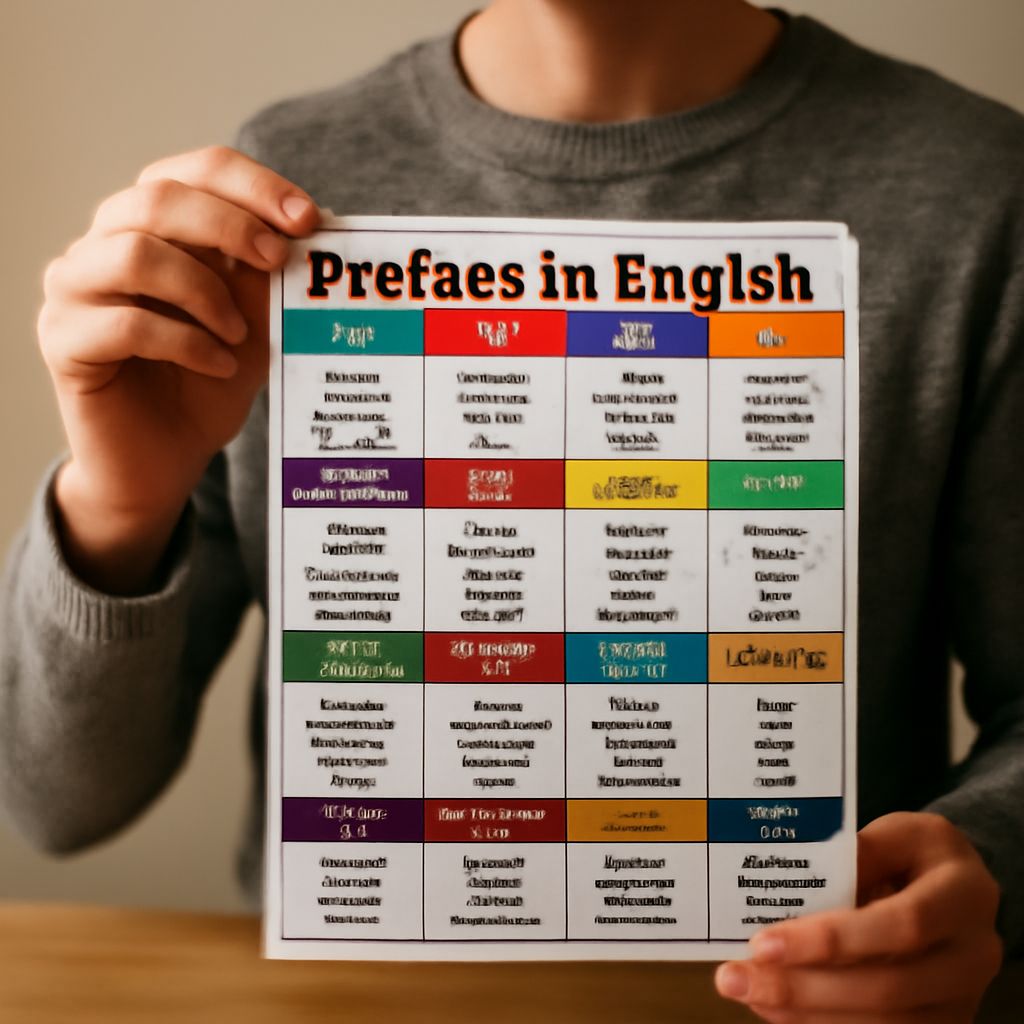
Prefixes are building blocks that expand your vocabulary and enable more expressive writing. For script and story writers, knowing how to use a prefix list and applying a robust prefix words list can add depth, nuance, and clarity to characters, dialogue, and narrative flow. Mastering prefixes helps you craft richer worlds and more dynamic scripts by allowing you to alter word meanings and explore new perspectives.
Understanding prefixes and their role in language
A prefix is a letter or group of letters added to the beginning of a word to change its meaning. Understanding prefixes is essential for writers because they allow you to modify words to convey new ideas, opposites, repetitions, or intensifications. For example, adding un- to “happy” creates “unhappy,” altering the original meaning.
Prefixes are common across English, and they frequently appear in dialogue, internal monologue, and world-building. They are not just mechanical parts of words; they help shape tone, genre, and even character identity. A villain described with words like “disloyal,” “irreverent,” or “preemptive” signals something different than one described as “loyal” or “reverent.”
Writers use prefixes to adjust the nuance of descriptions, actions, and motivations. This flexibility is especially valuable when you need to show contrast, develop character arcs, or introduce technical or fantastical elements without resorting to awkward explanations.
Comprehensive prefix list for writers
This prefix list covers common and useful prefixes that writers frequently use in scripts and stories. Each prefix is followed by its basic meaning and an example to illustrate integration into vocabulary:
- Un-: not, opposite of (unseen, unkind)
- Re-: again, back (rewrite, return)
- Dis-: not, opposite of, reverse (disagree, disconnect)
- Pre-: before (predict, prepare)
- Mis-: wrongly, badly (misunderstand, misplace)
- Over-: too much (overact, oversleep)
- Under-: too little, below (underestimate, underground)
- Inter-: between, among (interact, interconnected)
- Sub-: under, below (submarine, subtext)
- Anti-: against, opposed to (antagonist, antihero)
- Post-: after (postwar, postscript)
- Pro-: for, forward (proactive, protagonist)
- Trans-: across, beyond (transform, transcend)
- Non-: not (nonfiction, nonviolent)
- Semi-: half, partly (semicircle, semiannual)
Including a variety of prefixes from this prefix words list can help diversify your writing style and offer more tools for character and plot development. The above examples are a starting point for expanding your creative vocabulary.
How to use prefix words in script and story writing
Applying prefixes strategically enhances clarity and impact. Start by identifying base words that fit your scene or character. Consider what nuance you want to introduce—such as opposition, repetition, or timing—and choose a prefix accordingly. For example, turning “act” into “overact” instantly conveys exaggeration.
Prefixes can help you establish genre conventions. In science fiction, prefixes like “inter-” and “trans-” evoke futuristic or otherworldly settings. In drama, “mis-” and “dis-” introduce tension or conflict. Using a prefix list as your reference, you can efficiently vary word choice and avoid repetition in narrative description or dialogue.
Writers should also watch for overuse. Prefixes are most effective when used with purpose, not as fillers. Focus on prefixes that reveal character traits, amplify stakes, or help readers understand the world’s logic. This approach keeps your writing concise and meaningful.
When revising, scan your script for opportunities to use more specific or impactful prefix words. This can make emotional beats sharper and action more compelling.
Practical examples of prefix words in storytelling
Using prefix words in context creates memorable and effective prose. For example, a script may introduce a character as “disillusioned” rather than just “sad,” immediately signaling a deeper conflict or transformation. Dialogue can use prefix words for authenticity: “You always overcomplicate things,” or “Let’s revisit that plan.”
In world-building, prefixes set tone. A dystopian story might feature “sublevels” or “prewar” relics, while a detective script could highlight “miscommunications” or “reinvestigations.” Prefixes like “antihero” and “protagonist” define roles without lengthy exposition.
Prefix words also enhance pacing. Quick prefix-based descriptors (“underprepared,” “overzealous,” “resubmit”) communicate stakes and urgency with few words. This efficiency is vital in scripts, where word count and timing matter.
To build your own prefix words list for reference, collect examples from published scripts, novels, or your drafts. Regularly updating your list will make it easier to spot new opportunities to strengthen your writing with well-chosen prefixes.