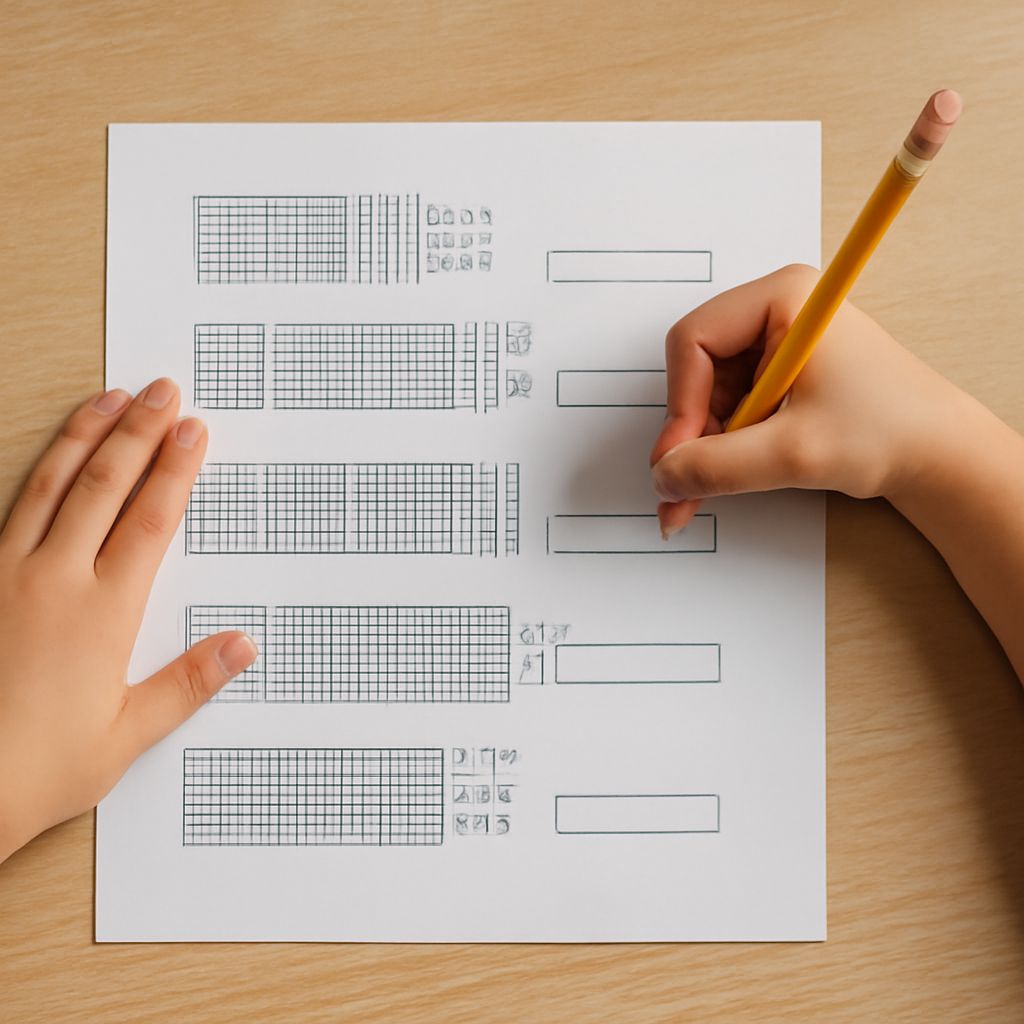
Base ten blocks worksheets provide students with meaningful, hands-on practice for understanding place value, addition, subtraction, and regrouping. These resources use visual math manipulatives to represent numbers with units, rods, flats, and cubes. Teachers and parents often use base ten blocks worksheets in elementary math instruction to reinforce key concepts and support learners who benefit from visual and tactile strategies. This article explores what base ten blocks worksheets are, how place value blocks worksheets support math understanding, where to find printable options, and practical tips for effective classroom use.
What are base ten blocks worksheets?
Base ten blocks worksheets are printable or digital practice sheets that use illustrations of base ten blocks to help students model math problems. A standard base ten block system includes single-unit cubes (ones), rods (tens), flats (hundreds), and cubes (thousands), each representing corresponding place values. On these worksheets, students match visual representations to numbers, compose and decompose values, or solve addition and subtraction problems using the blocks as guides.
Many base ten blocks worksheets feature activities such as filling in numbers to match block diagrams, drawing blocks to represent given numbers, or circling models that show a specific value. These worksheets can be designed for a range of skill levels, from introducing place value in early grades to supporting regrouping and multi-digit operations in higher elementary grades. Their purpose is to build a concrete understanding of the number system, making math more accessible to visual and hands-on learners.
Teachers often select these materials to supplement math lessons, provide differentiated practice, or offer intervention support. Many worksheets are aligned with common math standards, making them suitable for use in classrooms, tutoring, or independent study settings.
How place value blocks worksheets support learning
Place value blocks worksheets use base ten blocks as visual aids, allowing students to see how numbers are built from ones, tens, hundreds, and beyond. This approach is particularly effective for young learners who are just beginning to understand our decimal system. By manipulating or coloring in base ten blocks on worksheets, students make abstract concepts more concrete and develop a stronger foundation in number sense.
Place value blocks worksheets help students:
- Visualize the value of each digit in a number based on its position.
- Break down multi-digit numbers into manageable parts for easier computation.
- Practice regrouping and borrowing in addition and subtraction by physically moving or drawing blocks.
- Identify common mistakes, such as miscounting place values or misunderstanding zero as a placeholder.
Students who use place value blocks worksheets often demonstrate improved accuracy and confidence when solving math problems without manipulatives. These resources also benefit English language learners and students with math anxiety, as the visual supports reduce cognitive load and clarify challenging concepts.
Printable base ten blocks worksheets and classroom ideas
A variety of printable base ten blocks worksheets are available for immediate classroom or home use. Several educational publishers and math resource websites offer free and paid worksheets tailored to different grade levels and concepts. Popular options include:
- TeacherVision – Printable worksheets for kindergarten through grade 5, covering number building, addition, subtraction, and regrouping.
- Education.com – A comprehensive library of base ten blocks worksheets with answer keys and digital activity versions.
- Math-Aids.com – Customizable worksheet generators for creating unique sets focused on place value, composing and decomposing numbers, and arithmetic operations.
- K5 Learning – Free PDF worksheets suitable for classroom centers, math warm-ups, or homework assignments.
To maximize engagement, teachers can use base ten blocks worksheets alongside physical manipulatives. For example, students can build the numbers on their worksheets with real blocks before recording answers. Other classroom ideas include:
- Math centers where students rotate through worksheet stations for independent practice.
- Partner games to race in building or identifying numbers using printed block diagrams.
- Small group interventions targeting specific place value gaps using scaffolded worksheets.
Printable worksheets can be laminated and reused with dry-erase markers, making them a durable and flexible option for frequent skill review.
Tips for using place value blocks worksheets effectively
To get the most from place value blocks worksheets, focus on matching the worksheet difficulty to student readiness. Begin with simple activities, such as matching pictures to numbers, then advance to more complex tasks like multi-digit addition with regrouping. Always allow students to manipulate real base ten blocks before moving to abstract representations on paper.
Encourage students to verbalize their thinking as they work through problems. For example, ask them to explain how many tens and ones they see, or why a particular regrouping step was necessary. This practice deepens understanding and builds math vocabulary.
Use place value blocks worksheets regularly but vary the activities to maintain interest. Mix in games, hands-on projects, and open-ended challenges to keep practice meaningful. For students needing extra support, use worksheets with clear visuals and fewer problems, allowing more time to discuss strategies and check for understanding.
By selecting targeted worksheets and integrating them thoughtfully into lessons, teachers can help students unlock a true understanding of place value and number relationships that will support future math success.