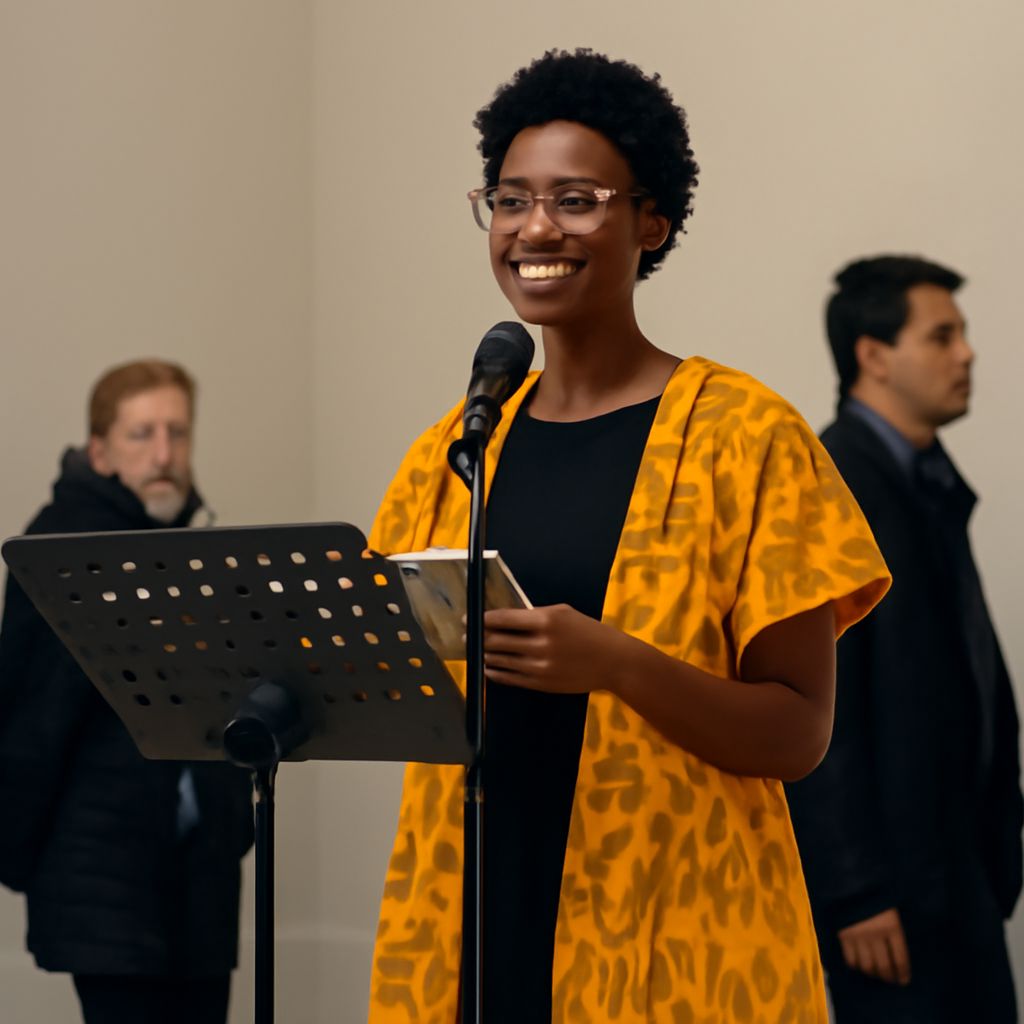
A well-placed pause can make a room hear an ordinary sentence as a confession. What is poetry for spoken word? It is writing shaped for a voice and an audience, where sound, timing, and the listener’s attention help carry meaning.
The words still matter on the page. A line break can suggest a turn; a repeated phrase can build expectation. In performance, breath and delivery give those marks a duration. A listener cannot look back at the previous line, so the performer has to make each turn clear as it passes.
What Is Spoken Word Poetry and How Does It Work?
Ask “what is spoken word poetry” and the answer includes both composition and performance. A poet may write every word in advance, revise by speaking aloud, or work from a looser text. The form can tell a story, make an argument, explore an image, or address someone directly. It can rhyme, but it does not have to. Poetry written for the spoken word can make those choices audible through pace and stress.
A spoken word poem might be performed at an open mic, recorded for a listener at home, or shared in a classroom. Slam is one competitive setting for performance poetry, with its own event rules; it is one part of a much wider practice. A quiet piece about a kitchen table has as much reason to use the voice as a piece meant to fill a hall.
What makes poetry for spoken word different on stage is the meeting between a particular text, a particular delivery, and the people hearing it. No two rooms breathe quite alike. The performer can prepare the words and still leave space for the room to answer.
Hear the Rhythm Before You Mark It
Read the text at a natural speaking pace first. Notice repeated sounds, changes in sentence length, and words that resist being rushed. Mark where a thought turns, rather than putting a breath at every printed line ending. A line break can invite a pause; the sentence may also carry across it.
Try this short original fragment:
I left the light on.
Not for the street.
For the person coming home.
The repeated “for” sets up a correction. On the page, the short middle line stands alone. The reader can see the final line before deciding how the thought lands. In a room, you control when the audience receives it.
First, say the fragment plainly. Give the period after “on” a small pause and carry the last two lines as one thought. The speaker sounds as if they are explaining a practical choice. Now try a longer pause after “street,” and let the final line arrive more softly. The same words can suggest care mixed with worry.
A third reading can place stress on “person.” That choice directs attention toward who is expected, rather than the light itself. Record each version and listen for whether the change is audible without becoming exaggerated. Pick the reading that fits the speaker you have imagined. The page has not changed; the implied situation has.
Address Someone, Even in a Crowd
Before rehearsing, decide who the speaker is talking to. In the fragment, the listener could be the returning person, a neighbor, or the speaker alone. That choice can alter the direction and energy of a line. An explanation to a neighbor may be brisk. A private admission may take longer to emerge.
Choose one person or point in the room for a thought, then let your focus move when the thought changes. You do not have to stare at an audience member until they regret buying a ticket. A clear imagined listener gives your words a destination and helps distinguish an invitation from a challenge.
Varying volume is only one way to create emphasis. You can slow a phrase, change its pitch, or remove a pause so one thought tumbles into the next. If every line receives the same weight, the listener has fewer clues about what matters now. Mark two moments that need attention and give each a different kind of emphasis.
Leave Room for the Audience
At a live reading, laughter may cover the next line. An unexpected silence may make a phrase feel heavier than it did in rehearsal. Wait until listeners can hear you again, then continue from the thought you were playing. You can let a reaction settle without treating every silence as a cue to stretch the piece.
A recording offers different choices. There is no visible room to respond to, and a microphone can catch small shifts in breath and volume. Keep a consistent distance from it during a take, and listen back for words lost when you turn away or drop your voice. Intimacy still needs to be understandable.
Some spoken word poems invite a response; others ask the audience to sit with a silence. For your next reading, mark one change of thought, read the passage twice with a short and a long pause there, and ask a listener what each version made them expect next.