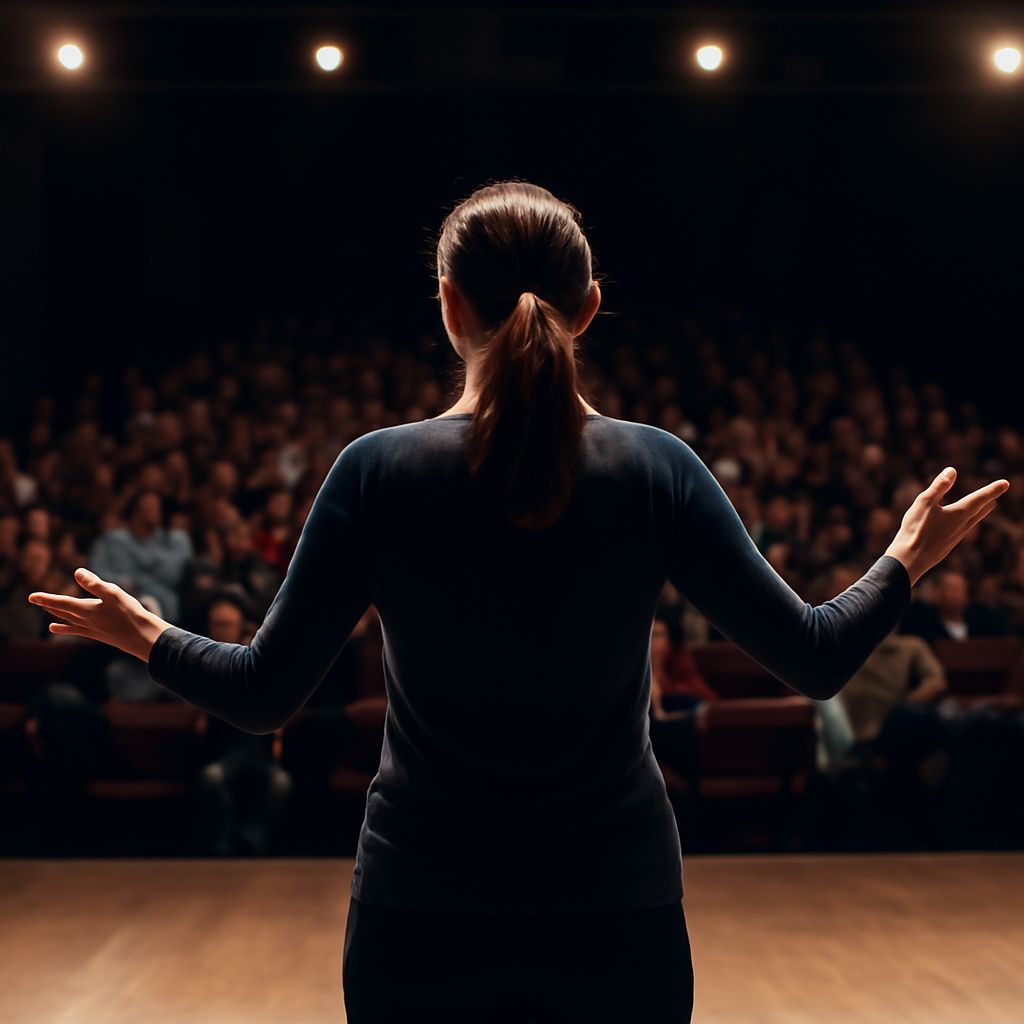
Before you rehearse a scene, find out where the audience will sit. Stages in a theater place performers and spectators in different relationships, so the same turn, entrance, or whispered line can land differently in each room. Walk the seating area and look back at the acting space. The view may solve a problem before it reaches opening night.
Theater Stages and the Audience
The basic distinction is how many sides of the playing area have spectators. In an end-on arrangement, everyone faces the action from one general direction. A thrust projects among seats on three sides; an arena places the audience around the action. A traverse puts spectators on two opposite sides. Theatrecrafts illustrates these layouts. The building, scenery, and production can alter the details, so use the actual seating plan as your map.
Theatre stages also differ in how entrances are concealed. Wings may hide an actor until a cue; an aisle entrance may put that actor in view much earlier. Ask the stage manager where your route starts and where you can safely wait. The audience can begin reading your character before the first line arrives.
End-On and Proscenium
An end stage theatre places its audience facing one end of the room. A proscenium is a familiar version, with an architectural frame around the opening. End-on arrangements need not all have that frame. A set can create an apparent room with a wall removed, allowing the audience to observe action from the same side.
That shared view helps the director shape a picture. It does not make every seat identical. A tall chair that looks harmless from the center may hide a reaction from a side seat. Rehearse a key exchange, then ask a colleague to watch from both edges. Adjust a chair or a small turn before changing the whole scene.
In an end-on theater, entrances often come from the sides or through doors in the set. Confirm which openings are visible from the house. For a quiet line, aim the thought at your scene partner while keeping enough breath and articulation for the back row. Have someone listen there; volume that feels substantial onstage may disappear into the room.
Thrust and Arena
On a thrust, spectators sit on three sides of the extended playing area. A private exchange can feel close, but a long, fixed conversation may give one section a fine view of two backs. Build turns into the scene’s intentions: look toward a door when a sound occurs, move to a partner when the argument changes, or cross for a prop you actually need. A planned turn should serve the story as well as the view.
In arena staging, people surround the action. There is no permanent front. Theater stages with this arrangement reward blocking that shares important moments over time without forcing every line to face every seat. Choose the person or object your character needs, make a clear choice, and let the next action take you elsewhere. A slow, motivated turn can reveal a reaction to several sections; a constant spin makes the audience dizzy and the actor busy.
Entrances may pass through aisles or vomitories, passages connecting the stage with the seating area. Check the route with the production team and keep it clear. Low furniture often protects sightlines, but even a standing actor can mask a seated partner. Watch the scene from several sides before deciding that everyone has been seen.
Traverse and Flexible Spaces
In traverse staging, the audience faces the playing area from two opposing sides. A profile can be legible to both banks, while two actors standing directly in line may hide one another from an entire side. Test the important reveal from each bank. Keep the physical relationship between characters truthful, then make small adjustments to distance and angle.
A black box is a flexible space, often configured differently for each production. It does not tell you where the audience will be. Visit after the seating and set are established, or ask for the current plan. Stage configurations that look simple on paper can sound very different once seats, curtains, and people fill the room.
For any layout, rehearse the same short passage facing different directions while a listener checks clarity from the farthest occupied seats. Change breath support and articulation before pushing your voice. If a microphone is in use, agree on technique with the sound team and test it during movement. A microphone carries sound; it does not decide whom your character is speaking to.
Choose each turn or move for a clear dramatic reason, then verify that its essential action reaches the audience from the seats they actually occupy.