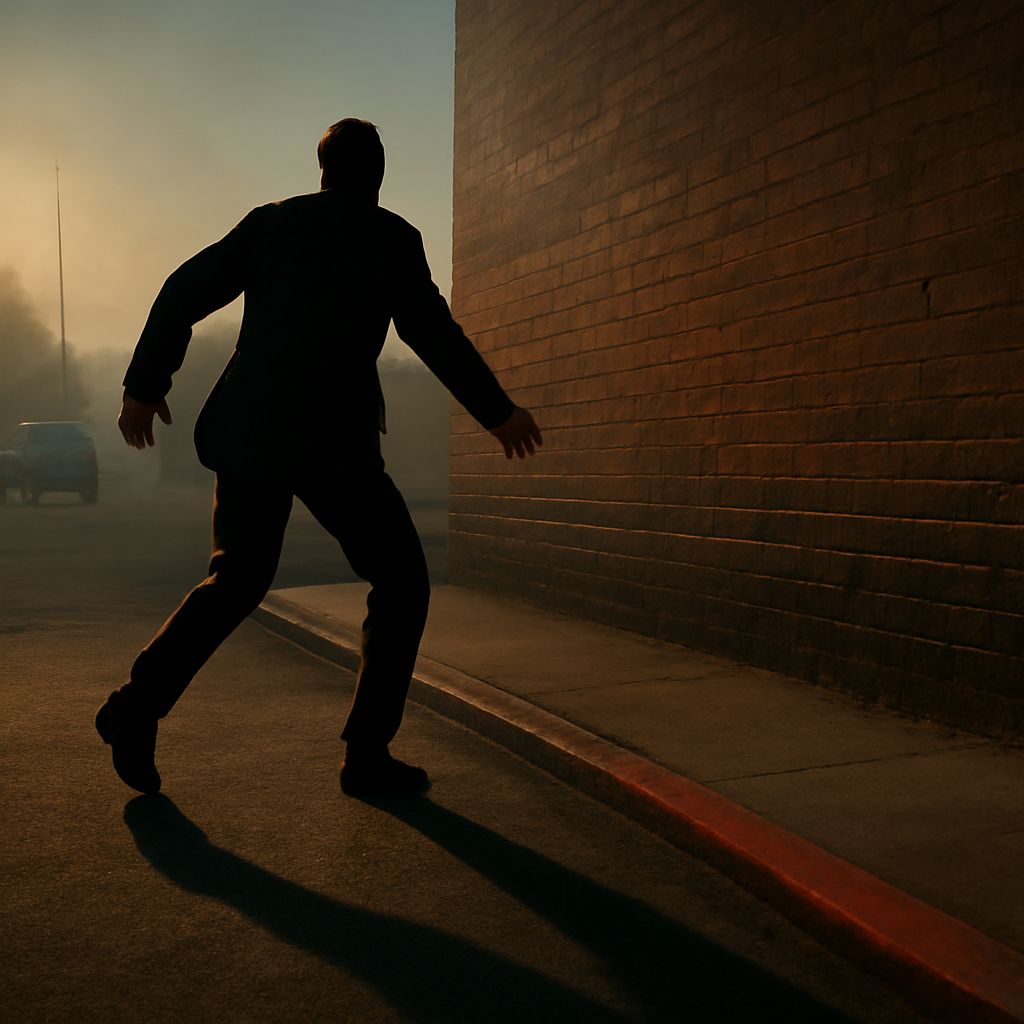
Start with Richard Hannay’s problem: a man has been murdered in his apartment, and the people responsible may be looking for him next. In John Buchan’s novel about thirty-nine steps, Hannay flees London, carrying a dead man’s secrets and trying to prevent a larger disaster.
The steps in this thirty-nine-step mystery are not just a catchy title. They become a physical clue near the end of a story about disguise, pursuit, and mistaken impressions. The account below follows Buchan’s novel, not a film’s rearranged plot. It reveals the ending.
The Thirty-Nine Steps: A Visitor Brings Trouble
Hannay is a restless man recently returned to Britain from southern Africa. A frightened neighbor, Franklin Scudder, asks for refuge and describes a conspiracy involving a planned political assassination and a threat to British naval secrets. Hannay shelters him. Soon afterward, he finds Scudder murdered in his flat.
Hannay expects the killers to come for him and fears that the police may suspect him of murder. He escapes in disguise and heads for Scotland. A notebook left by Scudder goes with him. It contains information Hannay cannot immediately understand, as well as a reference to steps that will matter later.
The National Library of Scotland’s account traces Hannay’s journey from London into Scotland. The 1915 novel is available through Project Gutenberg. Both sources were accessed November 19, 2026.
Running Through Scotland
The flight is not one long sprint. Hannay hides, borrows and changes identities, meets people who help him, and has to decide whom he can trust. He also faces enemies who can use respectable appearances as effectively as he uses a disguise. One helpful encounter may be followed by a dangerous one. A quiet room is not necessarily a safe room.
The notebook gives his movement a purpose beyond escape. Hannay works through Scudder’s coded notes and begins to understand the spy network known as the Black Stone. He eventually reaches officials who can act on his warning. The danger does not end there: the plot includes a plan to obtain and carry away sensitive information.
For a narrator, the practical question is what Hannay knows at each moment. Mark the point where a possibility becomes a suspicion, then where suspicion becomes a decision. Read the earlier passage without importing the answer from the later one. A listener cannot share the discovery if the voice has already announced it.
Suspense Lives in the Details
Buchan tells the story through Hannay’s first-person account. The reader follows his judgments, his resourcefulness, and his mistakes. His voice can be brisk and confident, yet the situation keeps testing that confidence. When he tells a story to gain someone’s trust, the performance has two layers: the words he offers and the purpose behind them.
In The Thirty-Nine Steps, an apparently ordinary person can turn out to be an enemy, and an unlikely stranger can offer real help. That uncertainty gives small observations weight. A gesture may matter more than a dramatic declaration. So may a scrap of writing that looks meaningless until a second clue appears.
The book also contains prejudiced language and assumptions, including antisemitic claims voiced by Scudder. Treat those as part of a character’s historically situated account, not as reliable explanations of events or people. A modern performance can preserve the text’s point of view while allowing listeners to recognize its prejudice.
What the Steps Finally Reveal
The thirty nine steps in Scudder’s notes point Hannay and the officials toward a coastal escape route. A tide time helps narrow the search. At a house near the steps, three men seem convincingly respectable, and Hannay nearly doubts himself. He recognizes a small habitual gesture from an earlier encounter and realizes who they are.
The confrontation leads to arrests. One man makes for the waiting yacht, but the authorities have already taken control of the vessel. The novel resolves this immediate spy plot before Hannay’s story moves toward the outbreak of war. Its title refers to a staircase down to the shore, rather than serving as a name for the spy organization.
Hitchcock’s film and later adaptations reshape Buchan’s material, so check the version in your script before assigning a character or an ending to the book. For a final reading exercise, take Hannay’s scene at the coastal house. Let his confidence falter when the men seem ordinary, then allow the recognition of that small gesture to sharpen his attention. The suspense comes from a mind changing, not from a voice staying tense all the way through.