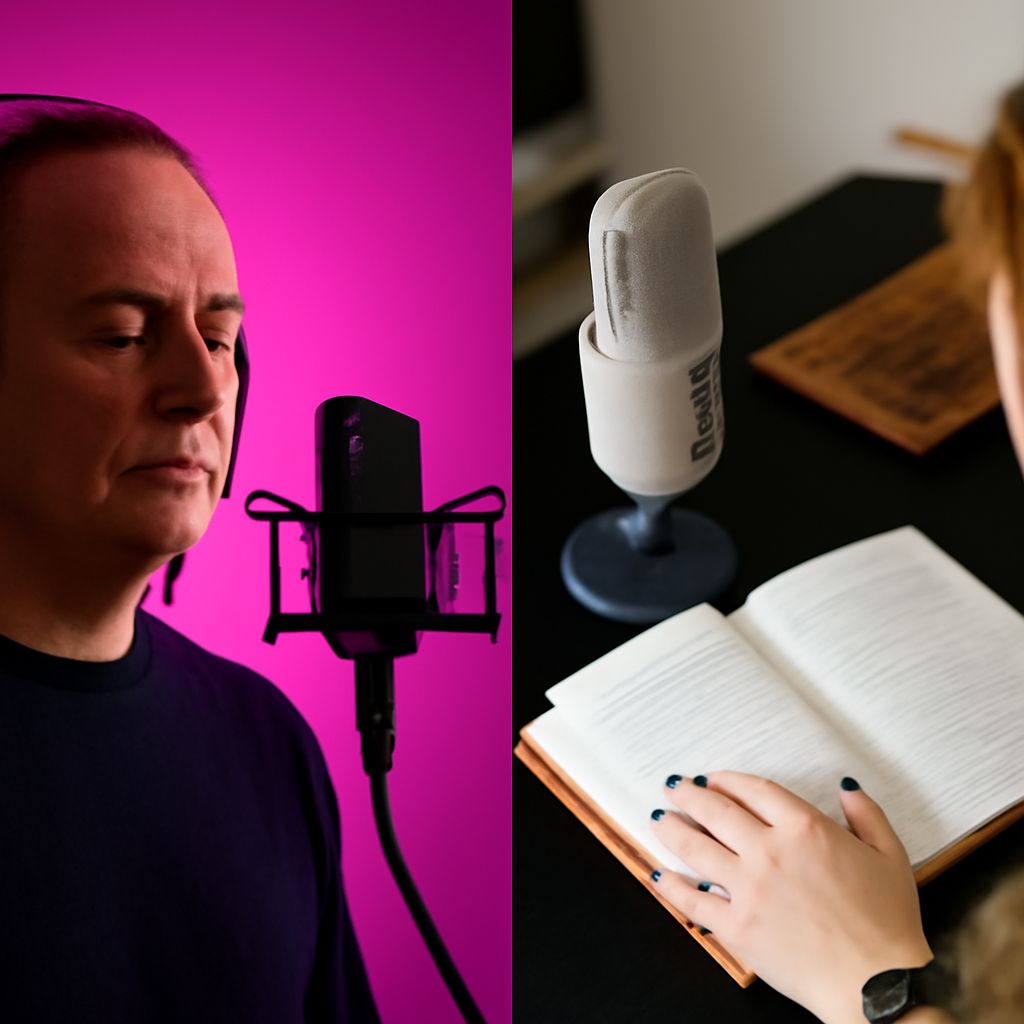
The best narrators do more than read every word accurately. They control pace, clarify meaning, differentiate characters, sustain energy across a long session, and fit the expectations of the genre. To learn how to make an audiobook that works, treat casting and performance as part of the complete production plan, not as separate decisions.
A practical workflow is: prepare the manuscript, cast or train the right reader, record with continuity controls, edit and proof the performance, then master and deliver correctly labeled files. Each stage protects the listener’s experience and reduces expensive revisions.
Best narrators: choose the right audiobook readers
Match pacing, clarity, stamina, and genre fit
Start with the book’s intended listening experience. A literary novel may need subtle emotional shifts and patient pacing. A thriller needs tension, forward motion, and enough restraint to keep suspense credible. A business book depends on authority, clean phrasing, and a conversational tone. A children’s book may require vivid character choices without sacrificing intelligibility.
Assess potential audiobook readers against the same criteria:
- Clarity: Words, sentence endings, and changes in volume remain easy to understand without sounding over-enunciated.
- Pacing: The reader varies speed for action, explanation, dialogue, and reflection. A fast delivery is not automatically energetic, and a slow delivery is not automatically thoughtful.
- Character differentiation: Each important character is recognizable through controlled changes in rhythm, pitch, attitude, or vocal placement. The choices should remain sustainable across the book.
- Stamina: The narrator can maintain vocal quality and concentration through long sessions. A short audition does not reveal whether the performance will hold up over several recording days.
- Genre fit: The voice, age range, emotional register, and performance history suit the audience and subject.
Request an audition using a short passage with narration, dialogue, emotional change, and difficult names. Give every candidate the same instructions. Review the recording on headphones and at ordinary listening volume. Listen for swallowed words, theatrical choices that overwhelm the prose, breath noise, and inconsistent character voices.
Compare respected narrators and their performance strengths
Named professionals can help establish a useful performance benchmark, even when they are not available for a project. Julia Whelan is widely associated with natural, emotionally detailed fiction narration and strong control of conversational pacing. Bahni Turpin is known for expressive character work, vocal clarity, and performances that carry complex social and emotional material.
Jim Dale demonstrates precise diction, memorable character differentiation, and exceptional stamina in long-form fantasy. Andy Serkis shows how physical commitment and dramatic range can support immersive fantasy and literary storytelling. Adjoa Andoh brings authoritative clarity and nuanced character choices, while Simon Vance is a useful model for controlled pacing, polished diction, and sustained narrative focus.
These examples are not a universal ranking. Choose the voice that serves the manuscript. A restrained narrator may be ideal for reflective nonfiction but wrong for broad comedy. A highly differentiated performer may elevate a fantasy novel but distract from a minimalist literary style. If you narrate your own book, use the same test: select a representative passage, record it repeatedly, and compare intelligibility, consistency, and vocal fatigue rather than choosing solely because you know the material best.
Prepare the manuscript, files, and production plan
Clean the script and research pronunciations
Prepare a narration manuscript before recording. Remove layout elements that should not be spoken, including running headers, page numbers, footnotes that are not part of the text, and visual instructions. Confirm chapter titles, section breaks, quotations, lists, abbreviations, and foreign-language passages. Mark words that need a specific pronunciation and decide how to read symbols, URLs, dates, equations, captions, and endnotes.
Build a pronunciation guide with the preferred pronunciation, a simple phonetic spelling or reference recording, and the first location where each term appears. Include character names, places, companies, technical vocabulary, historical names, and recurring abbreviations. Ask the author or a subject expert to approve uncertain entries before sessions begin. A single pronunciation decision made early prevents repeated pickups later.
Set schedules, session notes, pickups, and delivery specifications
Estimate the finished running time before casting. A typical narrator records several finished hours in a full day, but the usable amount depends on research, direction, complexity, and vocal recovery. Plan shorter sessions for demanding fiction, dialect-heavy work, or inexperienced readers. Reserve time for setup, breaks, file checks, editing, proof listening, and pickups.
Create a production sheet containing:
- Chapter and section names in the required order.
- Target recording dates, narrator availability, and approval deadlines.
- Pronunciation decisions, character notes, tone references, and continuity warnings.
- File naming rules, sample-rate and bit-depth requirements, channel format, and delivery limits.
- A pickup log with the chapter, page or paragraph, incorrect wording, replacement wording, and reason for the change.
Keep one approved script version. If the text changes after recording, highlight every revision and identify whether a sentence, paragraph, or entire section needs rerecording. This prevents editors from matching audio to an outdated manuscript.
Record and direct a consistent narration
Build a repeatable recording setup and direct the performance
Use a quiet, acoustically controlled room and place the microphone so the narrator can reproduce the same distance and angle at every session. Record a short room tone at the start and end of each session. Keep the microphone, pop filter, chair, music stand, and script position consistent. Monitor through closed-back headphones, and watch input levels so peaks do not clip.
Record a brief test passage before the main session. Check pronunciation, mouth noise, sibilance, plosives, background hum, pacing, and emotional tone. Fix the room or microphone position before capturing a chapter. Do not rely on editing to repair a noisy or distorted recording.
Direct for meaning rather than asking for constant dramatic intensity. Give specific notes such as “hold the pause before the admission” or “make the reply more defensive without raising the volume.” Protect continuity by referring to earlier choices. Character voices should remain distinct but comfortable; accents and vocal effects that cause strain will deteriorate over a long project.
At the end of each section, confirm the last spoken words and record a few seconds of room tone. Save sessions using descriptive filenames and back them up immediately. Keep a second copy in a separate location. A session is not safely captured until the audio has been checked after saving.
Track continuity and capture clean pickups
Mark every correction during recording. Record the corrected sentence from a natural lead-in when possible, then leave enough silence for the editor to identify the take. Also note changes in emotion, character position, pronunciation, page references, coughs, false starts, and noises that should be removed.
Review the end and beginning of adjacent sections for matching pace, loudness, room tone, and character choices. Schedule pickups after the first edit or proof pass, when the exact problems are known. A pickup should match the original microphone position, performance energy, pronunciation, and surrounding context. If a substantial rewrite changes the rhythm, rerecord the full paragraph rather than inserting one isolated sentence.
Edit, proof, master, and deliver the audiobook
Edit the performance and proof-listen for errors
Editing begins with selection and cleanup. Remove false starts, repeated words, long unintended pauses, distracting breaths, clicks, bumps, and obvious background noise. Preserve pauses that communicate thought, emotion, or a change of scene. Assemble chapters in the approved order and compare each edit against the manuscript, not only against the waveform.
Proof listening is a separate quality-control pass. Follow the text while listening and log every omitted word, incorrect word, mispronunciation, stumble, repeated line, bad edit, unnatural pause, and continuity problem. Check chapter openings and endings closely, because clipped entrances and abrupt fades are easy to miss. Have a second listener review the finished edit when the schedule allows. Resolve all logged issues through editing or pickups, then listen again to each corrected passage in context.
Master audio, add metadata, and deliver final files
Mastering balances the completed recording without changing the performance. Apply gentle processing to control inconsistent level, reduce appropriate noise, and manage excessive sibilance or low-frequency rumble. Check loudness, peak level, silence, and technical specifications against the intended distributor or platform. Requirements vary, so confirm them before mastering rather than converting files repeatedly at the end.
Export separate chapter files when required, using consistent names such as 01_Title, 02_Chapter_One, and 03_Chapter_Two. Check that each file opens, plays from beginning to end, and contains no accidental pre-roll, clipped audio, or missing final seconds. Keep an uncompressed archival master as well as the delivery versions.
Prepare metadata that matches the approved book record: title, subtitle, author, narrator, publisher or imprint, language, edition, series information, chapter sequence, and cover or accompanying assets when requested. Verify spelling and capitalization across the audio files, cover, and catalog record. Deliver the final package with the mastered files, metadata, pronunciation guide, approved script, and a change log. The audiobook is ready when the content is accurate, the performance is consistent, the files meet specification, and another listener can navigate the package without explanation.