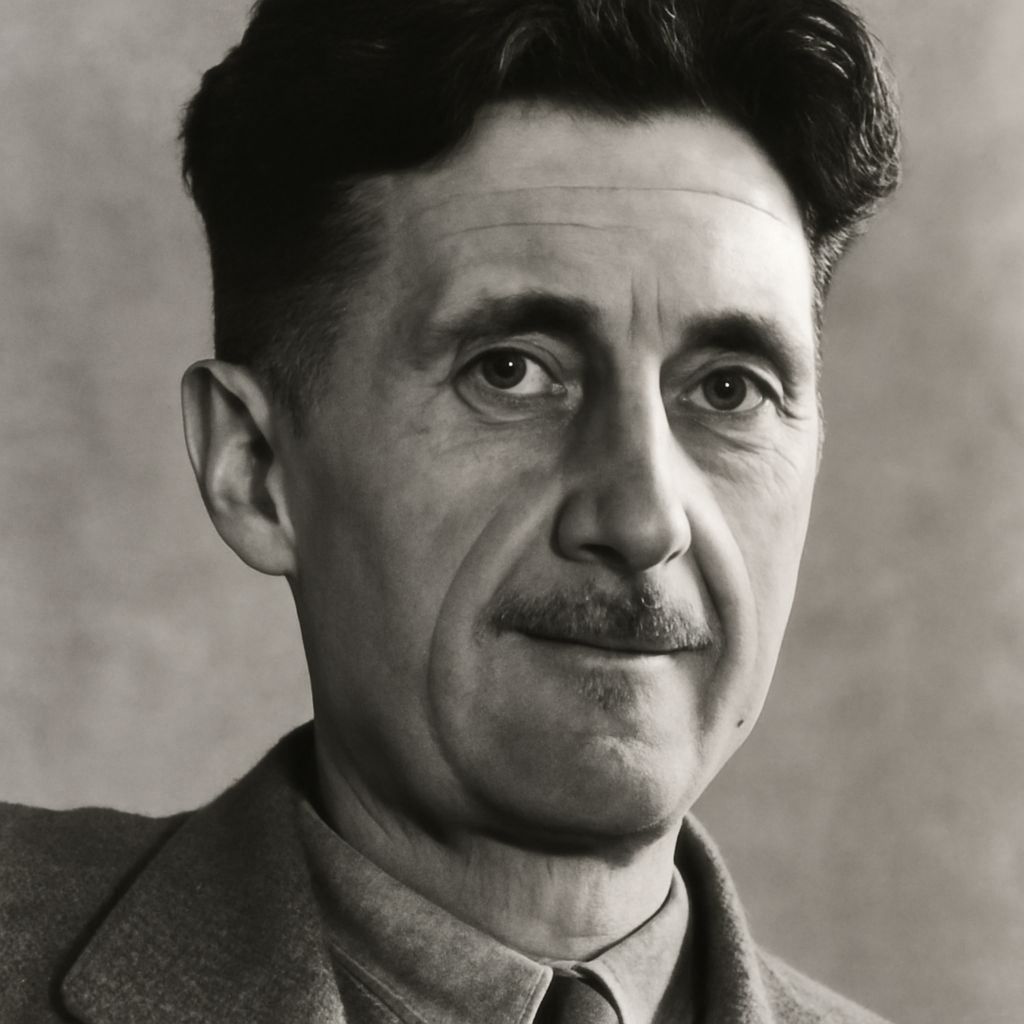
Eric Arthur Blair, better known by his pen name George Orwell, was a prominent writer and journalist whose works continue to resonate today. His educational background and early life experiences played a significant role in shaping his distinctive worldview and literary voice. This article delves into the formative years of Eric Arthur Blair, examining how his education and influences impacted the development of his writing style and themes.
The early life of Eric Arthur Blair
Eric Arthur Blair was born on June 25, 1903, in Motihari, Bihar, India, during the period of British colonial rule. His father, Richard Walmesley Blair, worked in the Indian Civil Service, while his mother, Ida Mabel Blair, was of French descent. When Blair was just a year old, his family moved back to England, settling in Henley-on-Thames. Growing up in a modest household, Blair was keenly aware of the class distinctions that would later become a central theme in his works.
From a young age, Blair exhibited a keen intellect and an aptitude for writing. His family’s socio-economic status provided him with opportunities for education, though it also exposed him to the stark realities of the British class system. These early experiences laid the groundwork for his critical view of social and political structures.
Educational journey and its impact
Eric attended St. Cyprian’s School in Eastbourne, a preparatory school where he experienced the privilege and rigidity of the English educational system. Despite the challenging environment, he excelled academically, earning scholarships first to Wellington College and subsequently to Eton College. Eton, with its illustrious history and notable alumni, was a formative influence, exposing Blair to intellectual debates and the writings of influential thinkers.
Though he did not pursue a university education, Blair’s time at Eton was crucial in honing his critical thinking and writing skills. His exposure to a diverse array of ideas and philosophies sparked his interest in social justice and political theory, themes that would permeate his later works. The pervasive class consciousness and authoritative structures at these institutions would deeply impact his perception of power and inequality, as reflected in his famous novels like “Animal Farm” and “1984.”
Influences on George Orwell’s writing
George Orwell’s writing was heavily informed by his personal experiences and observations of societal structures. His experiences in Burma, where he served in the Indian Imperial Police, further solidified his disdain for authoritarianism and colonialism. These views are evident in his first novel, “Burmese Days,” which critiques the harsh realities of imperial rule.
Orwell’s participation in the Spanish Civil War also had a profound impact on his political outlook. Fighting against fascism on the side of the Republicans, he witnessed firsthand the complexities of political ideologies and the betrayal of revolutionary ideals. This experience was documented in his book “Homage to Catalonia,” offering a vivid account of the turmoil and disillusionment that characterized the conflict.
Additionally, Orwell’s journalistic endeavors allowed him to explore and critique social injustices, such as poverty and inequality. His works “The Road to Wigan Pier” and “Down and Out in Paris and London” are poignant explorations of these issues, underscoring his commitment to social commentary.
Through his education and life experiences, Eric Arthur Blair, or George Orwell, developed a unique perspective that deeply influenced his writing. His works continue to challenge readers to examine societal norms and question authority, ensuring his place as one of the most influential writers of the 20th century.